
Over 200 ancient cultures across the world have preserved flood stories. The few that don’t are typically located in deserts, mountains, or the frozen Arctic, where large floods were not possible.
Many flood stories explain local survival against recurring cosmic chaos—whether caused by monsters, fate, or feuding gods—without moral accountability.
But some cultures frame their flood stories as cosmic resets of wayward human behaviour. They are personally inflicted by a god who has the intent of starting over with the chosen survivors that they rescue.
Here’s a summary of how the most theologically framed flood stories portray divine intention and survivor selection. The detailed accounts of some of these are remarkably similar to the Biblical account.
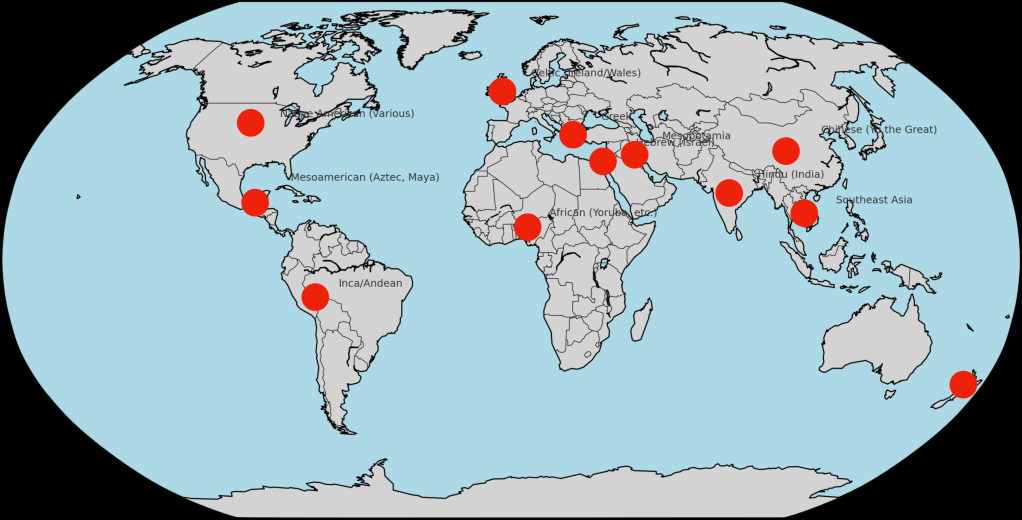
- Hebrew: God judging earth’s wickedness; God warned and instructed Noah
- Mesopotamia: Enlil reducing noisy humanity; Enki warned Utnapishtim
- Hindu: to cleanse and reset creation; Vishnu warned Manu in fish form
- Greek: Zeus wiping out corrupt humans; Prometheus warned Deucalion
- Chinese: cosmic chaos; Yu received divine help to control the flood
- Native American: Choctaw sent to punish; divine animals/spirits warn/help
- Mesoamerican: gods destroyed previous world age; gods helped repopulate
- Inca/Andean: Viracoacha destroyed disobedient people; also helps repopulate
- Polynesian: sent by gods in some tales; supernatural guidance or canoes
- African cultures: angry gods correcting imbalance; gods warn/instruct survivors
- Celtic: divine punishment; unclear if the gods helped the escape
- Southeast Asia: flood sent by many gods; survivors warned by gods or sacred animals
The Parable of the Floods
I wonder whether all the cultures actually got the same message through their flood, but like the parable of the sower, they had different responses.
Path – Snatched Away
- Harappan (Indus Valley): Advanced, but their script is undeciphered. No oral or written stories survived.
- Etruscans: Once dominant in Italy, their language and mythology disappeared under Roman conquest.
- Minoans: Brilliant civilization, but their narrative didn’t survive. Linear A remains unreadable.
- Olmecs: “Mother culture” of Mesoamerica, but left almost no stories of their own.
Rocks – Shallow, Withers
- Hittites: Powerful, innovative—but collapsed suddenly and vanished in the Bronze Age crisis.
- Mycenaeans: Linked to Homeric heroes, but completely collapsed. Oral tradition disconnected from their root.
Thorns – Choked by the World
- Rome: Inherited Greek myth, massive expansion—but spiritual identity drowned in decadence and empire-building.
- Nabataean (Petra): Wealth and trade made them flourish—until Roman politics and shifting routes left them desolate.
Good Soil – Reproduced
- The list of 12 above, the ones who received the message from the gods, are the only ones who reproduced continually and are still around today.
- The only exception is Mesopotamia—home to Babylon and the Tower of Babel. In Scripture, Babylon becomes a symbol of rebellion. A kind of Judas among the nations who became disciples. They were judged.
 Odd Sense of Zero
Leave a comment