
We’re looking for certain outcomes at the end of each stage. On the surface, it can look like organizational development goals: from individuals, to churches, to nations. You can imagine what those structures look like. But the actual goal is for God’s kingdom to come, for his Spirit to fill these groups of people and for Jesus to be our Leader. We’ll walk through the Fruit of the Spirit in Galatians 5.
We don’t have specific instructions, so what do we do?
You, my brothers and sisters, were called to be free. But do not use your freedom to indulge the flesh; rather, serve one another humbly in love. For the entire law is fulfilled in keeping this one command: “Love your neighbor as yourself.” If you bite and devour each other, watch out or you will be destroyed by each other. – Gal 5:13-15
How do we love our neighbor and not destroy each other?
So I say, walk by the Spirit, and you will not gratify the desires of the flesh. For the flesh desires what is contrary to the Spirit, and the Spirit what is contrary to the flesh. They are in conflict with each other, so that you are not to do whatever you want. But if you are led by the Spirit, you are not under the law. – Gal 5:16-18
What do we need to watch out for? What is not of the kingdom?
The acts of the flesh are obvious: sexual immorality, impurity and debauchery; idolatry and witchcraft; hatred, discord, jealousy, fits of rage, selfish ambition, dissensions, factions and envy; drunkenness, orgies, and the like. I warn you, as I did before, that those who live like this will not inherit the kingdom of God. – Gal 5:19-21
What are we hoping for? What does the kingdom look like?
But the fruit of the Spirit is love, joy, peace, forbearance, kindness, goodness, faithfulness, gentleness and self-control. Against such things there is no law. – Gal 5:22-23
How can we work together in humility?
Those who belong to Christ Jesus have crucified the flesh with its passions and desires. Since we live by the Spirit, let us keep in step with the Spirit. Let us not become conceited, provoking and envying each other. – Gal 5:24-26
Now I’m going to match the Mission Strategy Map stages with the fruit and flesh descriptions, in the order they appear in Galatians 5. “In order?” Yes, it’s not a perfect fit, but it’s an interesting exercise. If it feels like I’m forcing it, just ask the Holy Spirit what he wants to reveal to you as you read, and ignore the order.
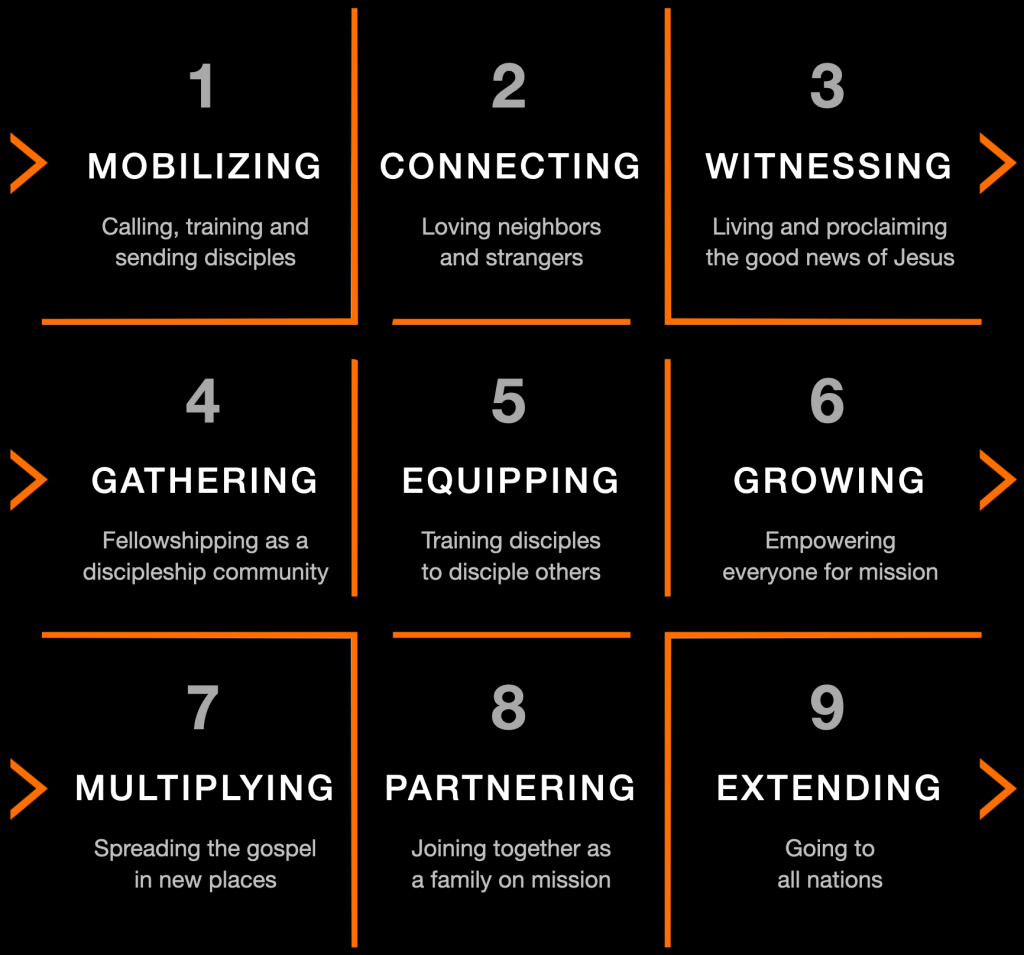
These examples are from an overseas, cross-cultural mission perspective….
1. Love vs. sexual immorality
Love is the motive. We love people, and send them out to love others. Biblical love is courageous, speaks the truth, costs everything, transforms people and reflects the heart of God. It’s the sum of the commandments, the definition of obedience and the reason God sent His Son. When we read the Bible through the lens of God’s love, it becomes a cohesive message we can share. Love is the foundation for everything that follows.
Any other motive is secondary, like calling passive people to fight, or poor people to take responsibility, or fearful people to risk, or lowly people to rise up. Even other words can get us off track, like calling people to “extend the kingdom”, “plant a church”, “share your faith”, etc. Without love it’s all useless: wisdom, faith, sacrifice, etc. (1 Co. 13). People read “love” in the Bible and can think it means to be nice. This keeps them from having the hard conversations with Christians and non-Christians.
The first act of the flesh in Galatians 5 is sexual immorality. This is a fake, self-centered version of love which fools us into thinking we’re experiencing intimacy. When our missional acts of “love” are really just about us, we’re building on the wrong foundation.
2. Joy vs. impurity
Joy is our strength. God designed us to give and receive love, and when we obey him we find joy. We encourage receiving love through being vulnerable and grateful. We encourage giving love through faith and the empowering presence of the Holy Spirit. You can tell you’re done this stage when you’ve developed new friendships where you both enjoy each other, and miss each other when you’re apart.
One-way relationships are disposable. If I love someone but don’t open myself up to receive love back, we don’t need each other, and either of us can switch to get our giving or receiving needs met in a different relationship. Unless the relationship progresses to us both giving and receiving, we’re just using each other.
Impurity is the fleshly alternative. If your friendship is not based on the love of the Father, you’re not following God’s design. This is where you bond with people improperly, and contaminate each other with your sin.
3. Peace vs. debauchery
Peace with God is our goal. We urge people to be reconciled to Christ. In the Old Testament, the only time there is peace (Shalom) is after a battle. In this case, we invite people to surrender their lives to the Lordship of Jesus Christ. As they lay down the things that they are clinging to, they can receive something better than they’d dreamed of: the Holy Spirit. The desired outcome is a “person of peace”. Sharing this peace requires spending time resting in God’s presence. It feels like Jesus is going ahead of you and directing your steps. There’s enough time in every day to do what God has asked of you.
In the flesh, we can be aggressive. Driven for results, we can live in the fear of failure, or the pride of our accomplishments. We can get really busy, and feel like we’re striving. When we are not living out of the peace of God, we cannot expect to multiply peace in others. We need to surrender our lives to Christ daily, not concerned with success, but with obedience. Following Jesus moment to moment is our only duty. We are not responsible for how people respond. We can pray fervently and engage people wholeheartedly, but it is undergirded with an unexplainable peace that acknowledges Jesus as Lord of the Harvest.
Debauchery is “excessive indulgence in sensual pleasures”. It’s how people live who have no peace. It’s an attempt to escape from the struggles of this world, especially how difficult it can be to lead someone to Christ. This is where we find ourselves extremely distracted, longing for a peace that only comes through Jesus, and being offered a counterfeit by the devil.
4. Patience vs. idolatry and witchcraft
Patience is the counterintuitive pace-setter. You may have heard the saying “slow is fast”. As people begin coming to Christ, the natural tendency is to have them rally around you. The problem arises later on when you try to turn the group over to someone who’s almost surely a less capable leader than you are. Very difficult. So we endeavor to let one of the new believers begin leading their friends to Jesus. This can take longer at first, as we often work through a series of false starts. But when it takes off, you have a local leader leading their own disciples. No need for turnover later. Patience is a compelling manifestation of love.
Jesus started where people were at. He looked at the rich young ruler and loved him. Then he invited him to give away his possessions to the poor. Jesus wasn’t using him to get stuff done. He saw that his salvation was in giving his life away. Jesus always loved the person right in his face. Likewise, we won’t go around leaders and undermine them in our rush to see results. We are going to discover the unique deposit of the Holy Spirit in them, and fan it into flame.
Our flesh tends toward idolatry and magic. We have a picture in our heads of what church should look like, and we have tips and tricks that would help get them there. At our worst, we are just using the new leader to accomplish our vision. At the same time, they may not have given up all their old ways, and are secretly still depending on idols and witches. Another good reason to take it slow.
5. Kindness vs. hatred and discord
Kindness is our method of discipleship. This stage is all about continuous repenting away from our selfish desires, and into the things of the Spirit. The Bible says it’s God’s kindness that leads us to repentance. His love covers over a multitude of sins. When we care deeply about people, we win them over with God’s love pouring out of our hearts. We confront them on any issue that would compel us to confront our own spouse, children or siblings. It’s our love for them that doesn’t want them to be stuck in their sin. It’s our hope for them that refuses to believe they can’t change. It’s our faith that allows us to hear God on their behalf, for words of life.
The flesh is bent on hostility and quick to quarrel. Immature leaders are on the lookout for faults in others and instantly jump into opportunities to confront. A bad sign is if you are wanting someone to just quietly leave the church. Of course, they can legitimately be wrecking things with their sin. But wishing someone wasn’t around is like cursing them. We are called to bless. We are called to love everyone. Sometimes that looks like suggesting they leave for a season. But not to get rid of them. Only if our motive is loving them.
Manipulating people to go make disciples so that your ministry can grow creates deep seated hatred, as they feel betrayed by your kingdom message. And it fosters discord, as the foundational motivation of love is being mixed in with a self-serving leadership posture.
6. Goodness vs. jealousy and fits of rage
Goodness is the anticipated result. We pray for healthy, two-way relationships where they have learned to love God, one another and the world. They have received the Holy Spirit and given their whole lives to Jesus. They are open, honest and vulnerable with each other, and love each other like family. They are engaged in the world and sharing the gospel with the lost.
The church is a healthy, sustainable community that is increasing in numbers. Everything isn’t perfect, but they’re moving in the right direction. The community around them may not join them, but for sure notices that they are doing good.
At this point in church life, they’ve been through quite a bit. There can be wounds that haven’t healed. Bitterness and resentment can build up. The flesh boils up and boils over. Emerging leaders are jealous of established leaders, nationals are jealous of missionaries, the unfruitful are jealous of the fruitful, people compare spiritual gifts, church planters are jealous of other pastors, and everything can get focused inward. The way forward is still love. Getting our eyes off ourselves and onto God, and who He’s calling us to love. We must be focused outward, or we will implode.
7. Faith vs. selfish ambition and dissensions
Faith is how we receive the kingdom of God. We are continually being invited into what seems impossible. Out of your midst, the Holy Spirit will raise up apostolic nationals who are anointed to see what we cannot. We are there to serve their God-given vision for their people. They will call people into church planting and other initiatives all over their region.
It will be messy. It might not make sense to us. But our faith is not in visionary leaders. Our confidence rests in Jesus. As we trust Him, and are led by His Spirit, we receive the grace to serve effectively. We must operate by faith, not by sight. This also means fully contributing our best insights and efforts, even if they don’t agree with the apostle.
Significant leaders in any movement will be tempted toward fleshly selfish ambition and independence. They have worked so hard to get where they are in Jesus that they sometimes cannot receive the wonderful people that God has given them. They may pull away and lose touch with their friends, all in the name of the work of the Lord. Their wife may not enjoy how hard they work. This requires faithfulness on our part, to walk with them, to feel the weight of their call, to not try to slow them down, but invite them into abiding in Jesus, living by faith, and receiving their identity in Christ.
8. Gentleness vs. factions and envy
Gentleness is how we work together with others. As the various leaders around the region begin to gain traction, they can be pulled together to form a family of churches. Leadership isn’t even the right word, but it can be how people see themselves.
The newly forming team of leaders needs to decide how to govern themselves. It’s helpful if the apostle is not the one officially leading the group, but the group will find it normal and healthy to continue to respond to their spiritual leadership. This group of pastors bands together for the mission of the existing churches, helping them grow and plant new churches.
The flesh jockeys for position and competes with others. Each of these leaders has their own story with Jesus. They’ve suffered and overcome. And they formed some ideas of how God works and how we participate. Now they collide with other leaders who have deep convictions that don’t match. The temptation is for them to see themselves according to their gifting or fruitfulness, rather than being brothers and sisters in Christ. Only as we gently submit to each other can our love overcome our insecurities and pride.
9. Self-Control vs. drunkenness and orgies
Self-control is our daily response to God’s leadership. As my mom used to say, “control yourself!” As our “self” becomes under control, that is, as we die to our self, the Holy Spirit is free to move through us unhindered. When the ministry moves beyond it’s borders and reaches out cross-culturally, they are essentially repeating these 9 stages in their own way.
That means, not in our way. After all we’ve invested, we are left dying to our own ways, so that they may have life. If you’ve watched your children leave home, get married and raise kids you would have an experience of the helplessness of letting them find their way in Jesus. The national leadership team will have the same experience. After all they’ve learned, they have to free the next generation to follow the Spirit as well.
The flesh is strong at this point. After all you’ve been through, everything is finally beginning to look like it’s working. Success! Let’s fine tune some things, make sure we have solid teaching, and clear up some pastoral issues. The final acts of the flesh in Galatians are drunkenness and orgies. You have the wine and the girls. Enjoy the fruits of your labors! The temptation to settle and maintain is a trap. The collective church will turn inward and become enthralled with her own entertainment. It can be dressed up as equipping, courses, seminars, prayer groups, children’s programs, building projects or whatever. But if we focus on ourselves we will have the same fate as the rich young ruler. We need to let go and receive God’s eternal kingdom.
 Odd Sense of Zero
Leave a comment